
EOS® for Agri-Business
EOS® for Agri-Business Companies
You can't control the weather, the board of trade, or input prices. Agri-businesses that thrive are ruthless about the things they can control — cost, execution, and people. EOS® is a system for exactly that.
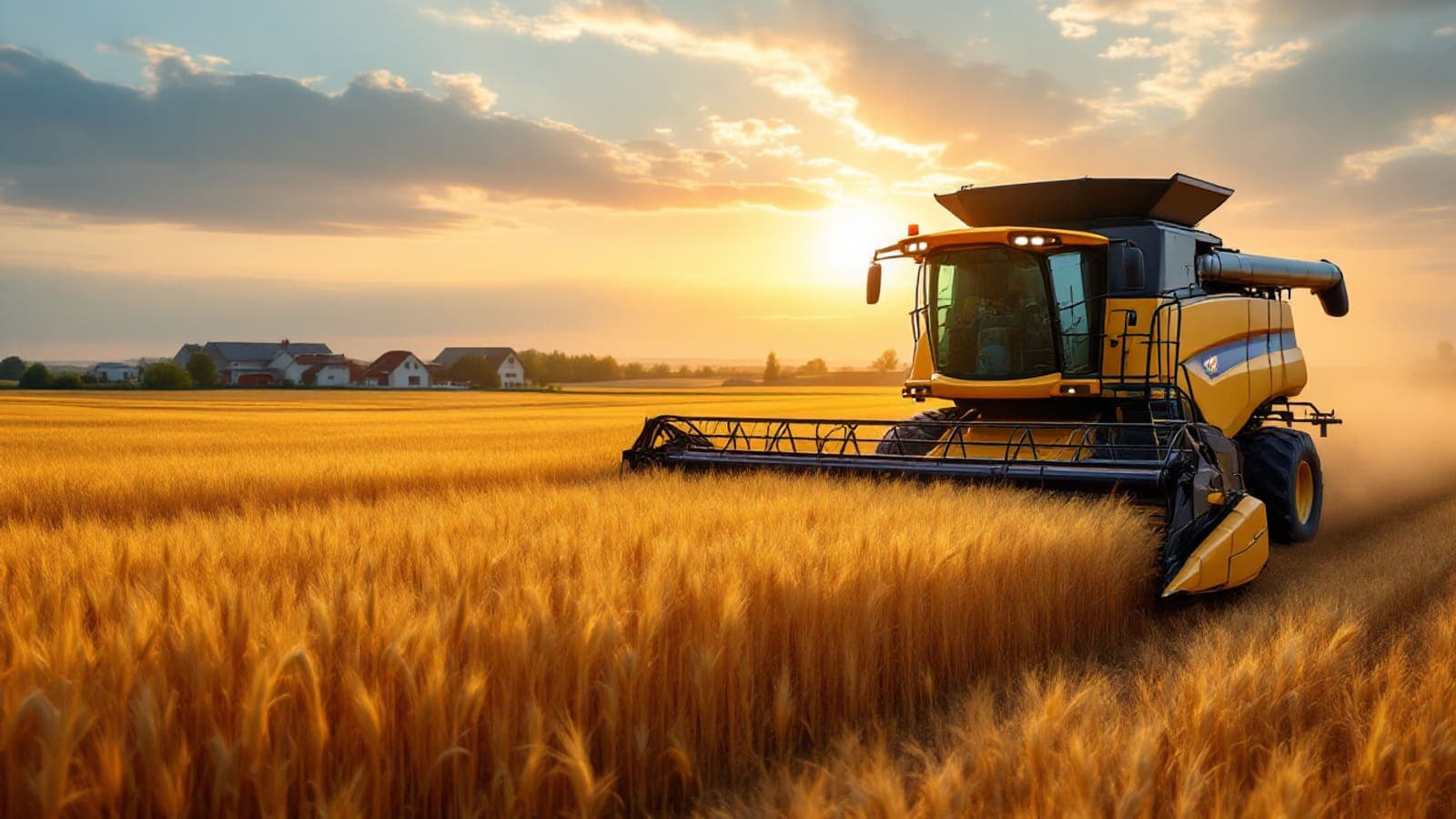
Agri-business covers a lot of ground — row-crop and livestock operations, ag retailers and input suppliers, grain handlers, equipment dealers, processors, and the service businesses around them. Across that spectrum, most companies share two traits: they're price takers in most of what they sell, and they're overwhelmingly family businesses, where the org chart, the dinner table, and the estate plan are tangled into one knot. Decisions that would be routine in another industry — who runs operations, when to expand, whether the son-in-law gets a seat — carry three generations of weight.
The Entrepreneurial Operating System® fits agri-business because the industry punishes sloppiness and can't reward heroics with pricing power. When commodity markets set your revenue, margin lives entirely in what you control: cost per acre or per unit, execution windows hit or missed, marketing discipline, and whether the right people hold the right responsibilities. As a Certified EOS Implementer®, Jon Kludt has facilitated 300+ sessions with founder- and family-led companies across a wide range of industries, helping leadership teams separate family questions from business questions — and run the business by a weekly Scorecard instead of tradition and gut feel.
Sound familiar?
- The 'org chart' is the family tree: responsibilities follow birth order and history, not skill, and nobody can talk about it without a holiday getting ruined.
- Grain or livestock marketing is emotional — decisions get made on hope and hindsight, with no written marketing plan and no one accountable for executing it.
- Dad (or Grandpa) still signs everything; the next generation runs the work but not the business, and succession is a topic everyone orbits and no one lands.
- Expansion decisions — land, buildings, equipment — are made on gut and tax strategy rather than a 3-year picture with real numbers.
- Costs per acre, per head, or per ton are known roughly at year-end, not managed during the season when they could be changed.
- The operation has grown into multiple entities (farm, trucking, retail, custom work) with no one clearly running each, and the profitable ones subsidize the hobby ones invisibly.
An example Agri-Business Accountability Chart
In agri-business the Accountability Chart does double duty: it organizes the company AND untangles the family from the functions. Seats are defined by the work, then names go in based on who genuinely gets it, wants it, and has capacity — not birth order. Here's a typical chart for a diversified farm or mid-size ag operation.
Visionary
- Landlord, lender, and key partner relationships
- Culture and core values across the family and crew
- Long-range strategy: land, diversification, next generation
- Big problem solving
Integrator
- Lead, manage, hold accountable (LMA)
- P&L and business plan execution across entities
- Remove obstacles between operations, marketing, and finance
- Special projects
Operations / Production
- LMA for operators and crew
- Agronomy or livestock program and execution windows (plant, spray, harvest; breeding, health)
- Cost per acre / per head / per ton
- Yield and production performance vs plan
- Labor scheduling and seasonal staffing
Commodity Marketing & Sales
- Written marketing plan and execution (targets, tools, dates)
- Basis, contracts, and hedging discipline
- Crop insurance strategy
- Customer/buyer relationships for non-commodity revenue
Equipment & Facilities
- Maintenance program and in-season uptime
- Equipment purchase/lease/sell analysis and capex plan
- Shop management and parts inventory
- Buildings, bins, and infrastructure projects
Finance & Admin
- Accurate accrual financials and cost accounting by enterprise
- Cash flow, operating line, and lender reporting
- Entity structure, leases, and compliance
- Payroll, HR, and record-keeping (H-2A where applicable)
Seats, not people — one person can hold more than one seat in a growing company. The chart defines the structure the business needs, then you put the right people in the right seats.
Setting your V/TO™ numbers: what healthy looks like
An agri-business V/TO™ has to respect what you don't control (price, weather) and be demanding about what you do. Operating profit margin is the honest yardstick — here's what the benchmark data says about healthy, because 'we cash-flowed' is not a strategy.
Operating profit margin
≥ 20% is the long-run strength benchmark; 10–20% is the caution zone
Purdue's benchmark work puts the long-run healthy bar around 20%+ of value of production, with ~15% needed to replace assets and grow. Below 10%, the operation is consuming itself slowly. (Purdue Center for Commercial Agriculture — Operating Profit Margin Benchmarks)
Sector-average margin (reality check)
~11–12% average operating margin across U.S. farms over the last decade
The average operation runs well below the 20% strength bar — and only about 16% of farms cover all accrual and opportunity costs. Being deliberately managed is itself a competitive position. (USDA ERS — Farm Sector Financial Ratios)
Cost of production vs. budget
Known per acre / per head / per ton, in-season, within 2–3% of budget
You can't control the sale price, so cost per unit IS the margin lever. If you only learn your true cost at tax time, the V/TO™ 1-year plan starts here.
Working capital / current ratio
Current ratio ≥ 1.5–2.0; working capital ≥ 20–25% of gross revenue
Working capital is an agri-business's shock absorber for a bad price year or a short crop. Rebuilding it belongs in the 1-year plan before the next expansion does.
Enterprise-level profitability
Every entity/enterprise carries its own P&L
Diversified operations often let the strong enterprise quietly subsidize the weak one for years. Enterprise accounting turns 'we think trucking pays for itself' into a number.
A weekly Agri-Business Scorecard that actually predicts
An agri-business Scorecard flexes with the season, but the discipline doesn't: 5–15 weekly numbers, each owned by one seat. In-season it leans operational; year-round it watches cost, cash, and the marketing plan.
| Measurable | Example target | Why it's on the Scorecard |
|---|---|---|
| % of production priced vs. marketing plan | On plan for the date | The marketing plan only works if it's executed on schedule, not on feelings about where the market is headed. This number makes hope visible — and accountable. |
| Cost per acre / per head vs. budget | Within 2–3% of budget | Price is the market's decision; cost is yours. Tracking it in-season means input decisions can still change the year's outcome. |
| Critical-window execution (planted/sprayed/harvested on time) | ≥ 95% of acres in window | Agronomy research is blunt: timing is yield. Every day outside the window is unrecoverable revenue lost — a weekly in-season number keeps the whole team focused on it. |
| Equipment uptime in season | ≥ 95% on critical machines | A combine down in harvest week costs more than a year of preventive maintenance. Uptime measures whether the winter shop program actually worked. |
| Operating line balance vs. projection | On or under plan | Cash burn drift is how operations sleepwalk into a hard renewal conversation. A weekly check keeps surprises out of the lender meeting. |
| Yield / production vs. plan (rolling) | Trend vs. APH or production plan | Production is the denominator of every unit cost. Watching the trend weekly during the season connects operational decisions to the financial plan. |
| Safety incidents / near misses | 0 / reported and reviewed | Agriculture remains one of the most dangerous occupations there is. A standing Scorecard line keeps safety a leadership issue in the busiest weeks — exactly when it's most at risk. |
Example quarterly Rocks
Rocks are the 3–7 most important things the operation must get done in the next 90 days — sized and timed around the season. Here's what strong Rocks look like for an agri-business leadership team:
- 1Write and adopt a formal grain-marketing plan with price/date triggers, and assign one owner to execute it
- 2Build enterprise-level P&Ls for the farm, trucking, and custom-work entities and decide the future of any that lose money
- 3Complete the winter equipment PM program on all critical machines before planting — 100% checklist compliance
- 4Move the next generation into the Integrator seat: transfer signing authority, lender relationship intros, and the weekly meeting chair
- 5Establish true cost of production per acre for each crop and re-bid the top 5 input purchases
- 6Rebuild working capital to 20% of gross revenue before committing to the land opportunity
Free download
Get the Agri-Business EOS® one-pager
The example Accountability Chart, benchmarks, Scorecard measurables, and Rocks from this page — on one branded PDF you can share with your leadership team.
From Jon's desk
You can't outwork the board of trade — so control what you can control
Agri-business is one of the only industries where nearly every leader is a price taker. The manufacturer can reprice. The contractor can bid higher. But the farm, the elevator, the feeder — the market hands them a price, and that's the price. Which leads to the industry's defining leadership question: if you can't control what you sell for, how ruthless are you about everything you can control?
Honest answer, in most operations: not very. And it's not laziness — nobody outworks farm people. It's that the operating model is tradition. Responsibilities follow the family tree instead of ability. The marketing 'plan' is a feeling about where prices are going, revised daily. True cost per acre shows up once a year, at tax time, when nothing can be done about it. And succession — the biggest business decision the operation will ever make — gets orbited for a decade because there's no structure that lets the family discuss it as a business question.
The data says discipline is rare and valuable: USDA's own ratio work shows only about one in six farms covers all its accrual and opportunity costs, and the sector's average operating margin has run around 11–12% against a long-run strength benchmark of 20%. The gap between average and strong isn't rain. It's management.
This is why EOS® lands so well in agri-business, even though it wasn't built for it. The Accountability Chart separates the family from the functions: seats are defined by the work — operations, marketing, equipment, finance — and filled by whoever truly gets it, wants it, and has capacity. Suddenly the son isn't 'taking over from Dad'; he's earning the Integrator seat, with defined accountabilities, while Dad moves to Visionary and keeps what he's genuinely best at. Same people, radically less friction, because the chart depersonalized the conversation.
The Scorecard does the same for execution: percent of production priced against the written marketing plan, cost per acre against budget, in-season execution windows, equipment uptime, the operating line against projection. Weekly, owned, visible. And the quarterly Rocks force the perennial 'someday' projects — enterprise P&Ls, the marketing plan, the succession step — to actually happen in 90-day bites between seasons.
You can't outwork a futures market, and you can't out-plan the weather. But an operation that knows its costs in-season, executes a written marketing plan, keeps its machines running in the critical windows, and has settled who runs what — that operation wins in every price environment, because it's playing the only game that was ever winnable. That's not a truism. It's a system, and it's installable.
Frequently asked questions
Our business is seasonal — half the year we're flat out, half we're planning. How does a weekly cadence survive harvest?
The Level 10 Meeting™ flexes but doesn't disappear — in-season many operations run it at 30–45 minutes, early, with the Scorecard weighted to execution numbers. Rocks are sized to the season: the heavy projects land in the off-season quarters, the in-season quarters carry lighter Rocks. The cadence surviving crunch time is exactly what makes it real.
We're a family operation. Does EOS® mean bringing in outsiders to run things?
No. It means defining the seats by the work and then being honest about who fills them — which is usually family, in better-fitting roles. The chart gives the family a way to discuss roles without it becoming a referendum on anyone's worth. Where a seat truly has no fit in the family, you'll know it clearly, which beats knowing it vaguely for ten years.
Half our decisions are tax- and estate-driven. Doesn't that override this kind of planning?
Tax and estate strategy shape how you structure decisions — they shouldn't be the reason the business drifts. EOS® gives the operation a 3-year picture and 1-year plan; your accountant and attorney then optimize the structure around actual goals instead of the business improvising around the tax tail. Advisors typically do better work once the family can articulate the plan.
Agri-business is broad — we're an ag retailer / equipment dealer / processor, not a farm. Does this apply?
Yes — the seats change but the system doesn't. An ag retailer's chart centers on sales/agronomy, operations, and inventory; a processor's looks closer to manufacturing. The system works across the ag value chain; the common threads are thin margins, seasonality, and family complexity, and those are exactly what the tools are built to handle.
A business coach for leadership teams in agri-business
If you've been searching for a business coach who understands agri-business, here's the honest difference with EOS®: instead of generic advice, you get a complete operating system — installed by a world-class business coach and Certified EOS Implementer® — that starts from your numbers, your seats, and your 90-day priorities.
Jon Kludt has facilitated 300+ sessions with founder-led leadership teams across a wide range of industries. The system is industry-agnostic by design; pages like this one exist so you can see it translated into your world before you ever book a call.
What leadership teams say about working with Jon
“EOS has completely changed my life. I used to be an over-stressed centralized operator of every decision, problem, option, and solution inside my business. Now I’m a decentralized owner of my business who enjoys owning a business that runs itself. The freedom to live, put my family first, and work ON my business, instead of in it, has given me peace and freedom I never thought possible. I work on my business when and how I want to, while I enjoy knowing it’s firing on all cylinders without my daily management or my time. EOS not only gave me life back, but my business has never been more successful; it’s on a growth trajectory that makes all my wildest dreams well within reach. Now I know it’s not if my business will achieve its goals, but simply when. And it’s such a fun experience to know that and watch it grow! ”
Nick Hooge
Owner of Freedom Boat Club, Seattle
“Jon has been a transformative coach for our leadership team. His ability to ask the right questions at the right time and guide us through real, lasting changes has been invaluable. We're more aligned, more accountable, and honestly — more excited about the business than we've been in years.”
Greg Grand
“Working with Jon has been one of the best investments we've made. He doesn't just teach a system — he coaches you through the hard conversations and holds you accountable. Our leadership team is stronger, our meetings are better, and we actually look forward to planning now.”
Peter Crabtree
Visionary of Crabtree Brands
Ready to run your business on EOS®?
Book a call. You'll leave with practical tools you can use right away — whether or not we work together.
Related industries