
EOS® for Event Companies
EOS® for Event Planning & Management Companies
Event businesses run on adrenaline: cash arrives in spikes, seasons swing from crush to crickets, and every event is a fire drill. EOS® gives the business a rhythm the calendar can't provide.
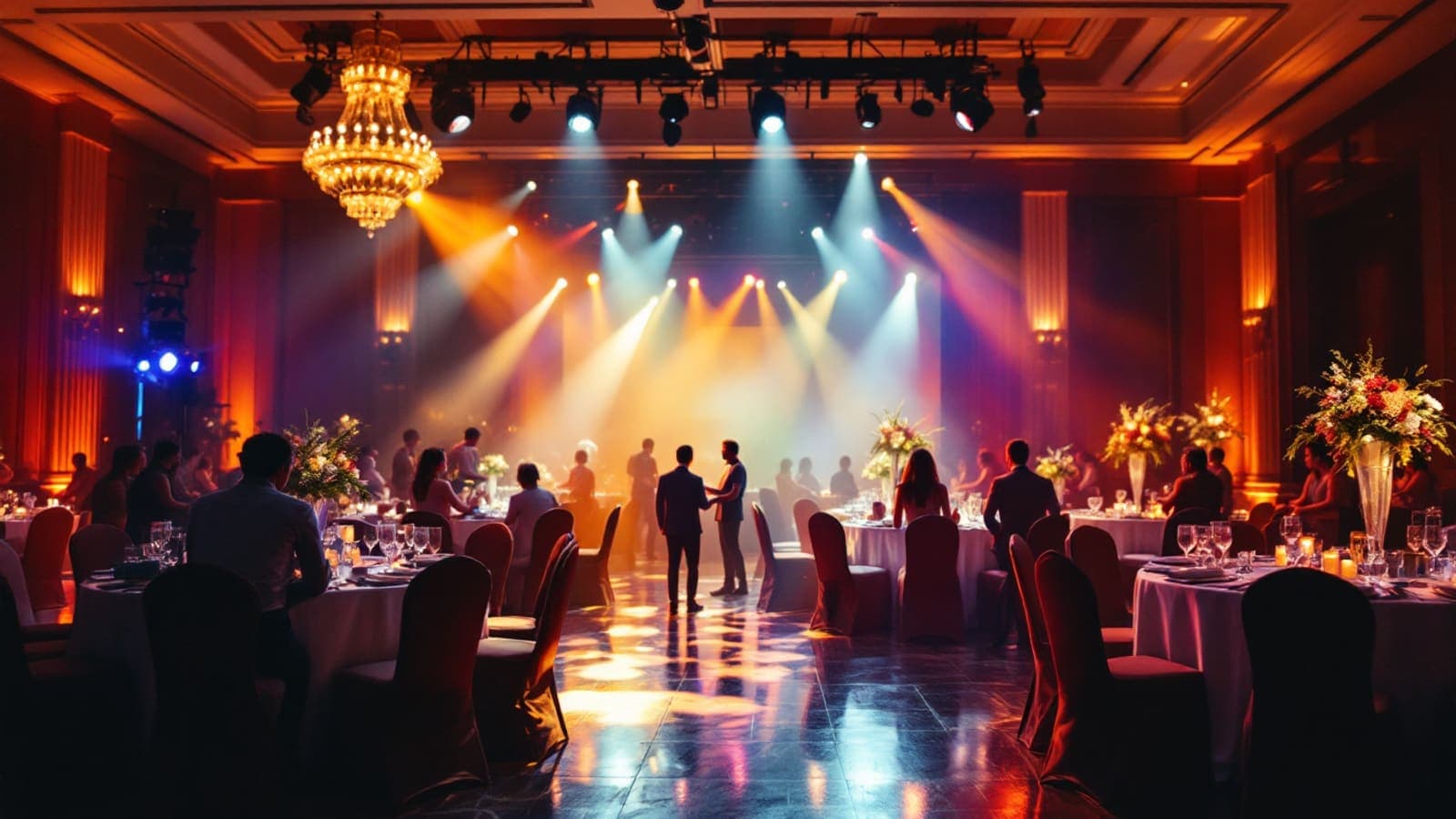
Event planning and management companies — corporate events, conferences, weddings, experiential — have a shape unlike any other agency business. Revenue arrives in project-sized spikes tied to deposit schedules. The busy season is a blur where everyone including the owner works doubles; the off-season is where cash quietly runs out. And because every event is high-stakes and live, the culture rewards heroics: the planner who saves the day at 11 p.m. gets celebrated, and the process gap that created the crisis never gets fixed.
The margins reward discipline when it exists — corporate events net 15–20% for well-run companies, weddings 10–15% — but discipline is exactly what the event calendar destroys. Post-event debriefs get skipped for the next load-in. Sales for next season stalls during this season's crush. The Entrepreneurial Operating System® installs the rhythm the calendar won't: a weekly pulse, quarterly priorities, and clear seats. As a Certified EOS Implementer® with 300+ sessions facilitated across a wide range of industries, Jon Kludt helps founder-led companies install that rhythm — and for an event company, that means a business that performs between events as reliably as it performs during them.
Sound familiar?
- Cash flow is a rollercoaster: deposit-rich months followed by payroll-sweating valleys, with no forward cash view.
- The owner is the lead planner, lead salesperson, and the only person clients trust with their event.
- Post-event P&Ls take weeks (or never happen), so nobody knows which events actually made money.
- Sales for next season stops dead during busy season — guaranteeing a famine two quarters later.
- Vendor costs creep on every event, and the budget variance is discovered after the invoices arrive.
- Great staff burn out in the seasonal crush and leave — taking client relationships and vendor knowledge with them.
An example Event Planning Accountability Chart
In an event company the chart has to separate winning the event, producing the event, and running the business — three jobs the owner usually holds at once. Here's a typical chart for a $1–10M event company.
Visionary
- Brand, creative direction, and signature experiences
- Marquee client and venue relationships
- Culture and core values
- New market and offer ideas
Integrator
- Lead, manage, hold accountable (LMA)
- P&L and business plan execution
- Balance the sales calendar against production capacity
- Special projects
Sales & Business Development
- LMA for sales/proposal team
- Pipeline and signed-contract targets by season
- Pricing and margin discipline on proposals
- Repeat and referral program for corporate clients
- Off-season selling cadence
Event Production / Operations
- LMA for planners and production staff
- Flawless event execution and run-of-show
- Staffing plans and freelance/contractor pool
- Event-day safety and contingency planning
Vendor & Logistics
- Vendor sourcing, contracts, and rate negotiation
- Budget tracking and cost variance per event
- Rentals, AV, catering, and venue coordination
- Load-in/load-out logistics
Finance & Admin
- Deposit schedules, billing, and collections
- 13-week cash flow forecast
- Event-level P&L within 14 days of close
- Insurance, contracts, and compliance
Seats, not people — one person can hold more than one seat in a growing company. The chart defines the structure the business needs, then you put the right people in the right seats.
Setting your V/TO™ numbers: what healthy looks like
An event company's V/TO™ numbers must respect the model's spiky reality: margins per event type, cash timing, and seasonal load. Here's what healthy looks like.
Net profit margin
10–20%; corporate 15–20%, weddings 10–15%
Event type drives the range — festivals and social events run thinner. If you're under 10% overall, the culprit is usually unmeasured vendor cost creep and free scope additions. (BusinessDojo — Event Management Profit Margins)
Gross margin per event
25–45% after venue, catering, AV, and direct costs
Measured per event, not annually. Below 25% on a signed proposal means the event is underpriced before load-in even starts. (Financial Models Lab — Event Planner Profitability)
Deposit coverage
40–50% collected at signing; cost-covered before event day
The cash-flow rule that keeps you from financing clients' events. Progress payments should cover committed vendor costs before you're on the hook.
Repeat/referral revenue share
≥ 50–60% for established corporate-event firms
Repeat corporate business is the flywheel that flattens seasonality. If every year starts from zero, sales discipline is the issue, not the market.
A weekly Event Planning Scorecard that actually predicts
An event company Scorecard has to see past the current event to the season after next. Weekly, owned by one seat, predictive.
| Measurable | Example target | Why it's on the Scorecard |
|---|---|---|
| Signed contracts vs. seasonal target | On pace by week | The number that prevents famine quarters. Next season is won or lost during this season's crush — weekly visibility keeps selling alive. |
| Proposals out / proposal win rate | Set from baseline | Leading indicator two steps ahead of revenue. A dry proposal log in June is a cash crisis in November. |
| Deposits collected on schedule % | 100% | Deposit slippage is how event companies end up bankrolling client events. Non-negotiable, checked weekly. |
| Budget variance on active events | ≤ 5% vs. approved budget | Vendor creep discovered after the invoices arrive is margin already lost. Tracking variance live keeps the event profitable while it can still be steered. |
| Event P&L closed within 14 days | 100% of completed events | If you don't know which events make money, you can't price the next season. Fast closes turn every event into pricing data. |
| Post-event client score (NPS/survey) | ≥ 9/10 average | Repeat and referral business is the seasonality cure. A weekly-reviewed score makes the follow-up and rebooking motion systematic. |
| 13-week cash position | ≥ 8 weeks of operating cost | Spiky revenue demands a forward cash view. This number turns the off-season from a scare into a plan. |
| Team hours over plan (burnout signal) | Flagged > 50 hrs/week | Losing a senior planner costs a season of client trust and vendor knowledge. Watching the load weekly is cheaper than the counteroffer. |
Example quarterly Rocks
Rocks are the 3–7 things that must get done in the next 90 days. Real examples from event company leadership teams:
- 1Build the 13-week cash flow forecast and set deposit/progress-payment terms so every event is cost-covered before event day
- 2Implement event-level P&L closes within 14 days and re-price the two worst-margin event types
- 3Launch the off-season sales cadence: 15 corporate proposals out before busy season starts
- 4Move the owner off day-of execution for standard events — lead planners own run-of-show end to end
- 5Document the event production playbook (timeline templates, vendor checklists, contingency plans) for the top 3 event types
- 6Stand up a rebooking program: contact every corporate client within 30 days post-event; 40% rebook rate by quarter end
Free download
Get the Event Planning EOS® one-pager
The example Accountability Chart, benchmarks, Scorecard measurables, and Rocks from this page — on one branded PDF you can share with your leadership team.
From Jon's desk
You can't run a company on event adrenaline
Event people are the best pure executors in business. Give them a ballroom, a load-in window, and a client with impossible expectations, and they will deliver a flawless night through sheer will. Then Monday comes, and the same company that ran a 400-person gala to the minute can't say which of last quarter's events made money.
That's not a competence gap — it's a rhythm gap. An event business gets its structure from the event calendar: everything has a hard deadline, so everything gets done. But the business itself — pricing, cash planning, next season's pipeline, the debrief that would fix the recurring crisis — has no event date attached. So it loses to the calendar every single week. Busy season devours sales time, which guarantees a famine two quarters out. Post-event P&Ls slide until they're archaeology. The off-season becomes a cash anxiety exercise instead of a build period.
The cash math makes this dangerous, not just untidy. Event revenue arrives in spikes — deposits at signing, balances around event day — while payroll is beautifully linear. Healthy corporate-event companies net 15–20%, but that margin is made or lost in the gaps: vendor creep discovered after the invoices, free scope added in the client-pleasing reflex, deposits that slip a month. Without a forward cash view, a profitable-on-paper company can still miss payroll in the valley between seasons.
EOS® works for event companies because it installs the rhythm the calendar refuses to provide. The weekly Level 10 Meeting™ is 90 minutes the crush can't cancel — where signed contracts vs. seasonal target, deposit collection, budget variance on live events, and the 13-week cash number get looked at whether it's load-in week or dead of January. Rocks give the off-season a job: this quarter we build the production playbook, fix deposit terms, launch the rebooking program. The Accountability Chart breaks the owner's triple shift — selling, planning, and running the company — into seats someone else can actually hold.
The deeper shift is cultural. Event companies celebrate the save — the planner who conjured a generator at midnight. EOS® teaches the team to also ask, in the issues list, why the generator was missing. Heroics still happen; they just stop being the system.
Your events run on a timeline, a budget, and an owner for every line item. Your company deserves the same production values.
Frequently asked questions
Our business is seasonal — when would we even do EOS® sessions?
The cadence bends to the calendar. Most event companies anchor the annual planning session and heavier quarterly work in the off-season, keep quarterlies short during the crush, and never skip the weekly 90-minute Level 10 Meeting™ — that meeting is precisely what keeps next season's pipeline and this month's cash visible during busy season. Seasonality is an argument for the structure, not against it.
Every event is different. Can a company built on custom work really be systematized?
The events are custom; the business isn't. Proposal-to-contract flow, deposit terms, vendor negotiation, budget tracking, run-of-show templates, post-event debriefs and rebooking — that machinery repeats every time and is exactly what EOS® processes and the Scorecard capture. Systematizing the 80% that repeats is what buys your planners creative room on the 20% that doesn't.
Clients book us because of the owner personally. How does that ever change?
Gradually and deliberately — it's usually a multi-quarter Rock. The owner moves to the Visionary seat (signature events, marquee relationships, creative direction) while lead planners take end-to-end ownership of standard events, with the playbook and client-transition plan making it safe. Companies that never make this move have an owner with a job, not a business with a value.
We use Aisle Planner / Monday / event software already. Does EOS® replace it?
No — your event software runs events; EOS® runs the company. Timelines, BEOs, and client portals stay exactly where they are. What EOS® adds is the layer those tools don't touch: who owns sales vs. production vs. vendors, whether events are profitable, where cash will be in 13 weeks, and what the company must fix this quarter.
A business coach for leadership teams in event planning
If you've been searching for a business coach who understands event planning, here's the honest difference with EOS®: instead of generic advice, you get a complete operating system — installed by a world-class business coach and Certified EOS Implementer® — that starts from your numbers, your seats, and your 90-day priorities.
Jon Kludt has facilitated 300+ sessions with founder-led leadership teams across a wide range of industries. The system is industry-agnostic by design; pages like this one exist so you can see it translated into your world before you ever book a call.
What leadership teams say about working with Jon
“EOS has completely changed my life. I used to be an over-stressed centralized operator of every decision, problem, option, and solution inside my business. Now I’m a decentralized owner of my business who enjoys owning a business that runs itself. The freedom to live, put my family first, and work ON my business, instead of in it, has given me peace and freedom I never thought possible. I work on my business when and how I want to, while I enjoy knowing it’s firing on all cylinders without my daily management or my time. EOS not only gave me life back, but my business has never been more successful; it’s on a growth trajectory that makes all my wildest dreams well within reach. Now I know it’s not if my business will achieve its goals, but simply when. And it’s such a fun experience to know that and watch it grow! ”
Nick Hooge
Owner of Freedom Boat Club, Seattle
“Jon has been a transformative coach for our leadership team. His ability to ask the right questions at the right time and guide us through real, lasting changes has been invaluable. We're more aligned, more accountable, and honestly — more excited about the business than we've been in years.”
Greg Grand
“Working with Jon has been one of the best investments we've made. He doesn't just teach a system — he coaches you through the hard conversations and holds you accountable. Our leadership team is stronger, our meetings are better, and we actually look forward to planning now.”
Peter Crabtree
Visionary of Crabtree Brands
Ready to run your business on EOS®?
Book a call. You'll leave with practical tools you can use right away — whether or not we work together.
Related industries