
EOS® for Home Services
EOS® for Home Services Companies
Whether you roll trucks for HVAC, run pest routes, or manage landscaping crews, the ceiling is the same: the business only runs as well as the owner's attention span. EOS® replaces owner-as-bottleneck with a leadership team that runs on real numbers.
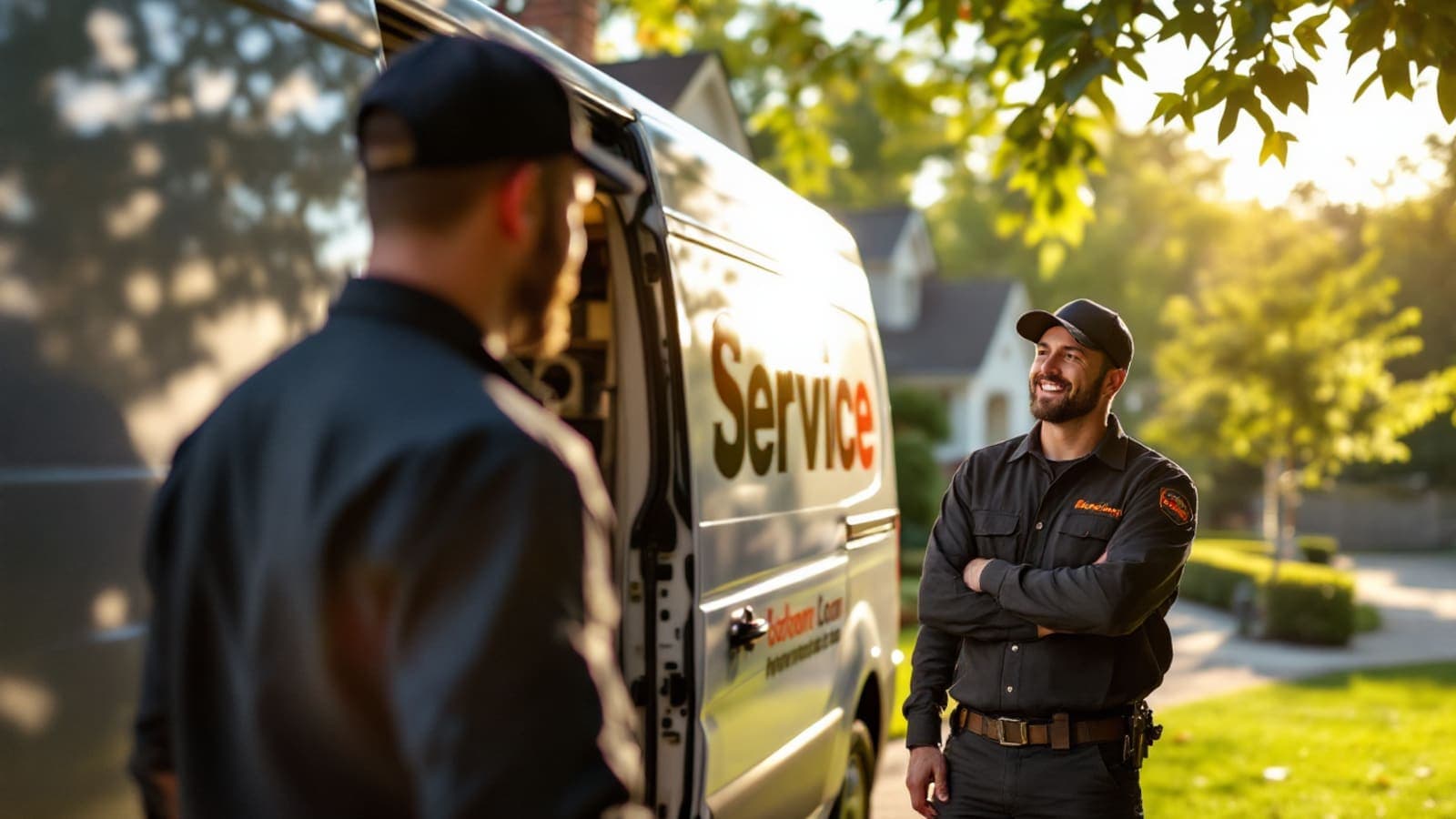
Home services is a huge, fragmented world — HVAC, plumbing, and electrical shops; landscaping and lawn care operations; pest control route businesses; cleaning and painting companies; security and home automation dealers. The trades differ, but the growth story is nearly identical: a technically excellent founder builds a reputation, the phone rings, trucks and crews get added, and somewhere between $2M and $10M the wheels start to wobble. The owner is still quoting jobs, refereeing dispatch, chasing AR, and answering the phone at dinner.
The economics reward whoever runs the tightest operation. Most home-service companies net somewhere between 5% and 12%, while well-run operations in the same trades hit 15–20% — the spread isn't luck or market, it's operating discipline. That's exactly the layer the Entrepreneurial Operating System® addresses: right people in the right seats, a weekly Scorecard of predictive numbers, quarterly Rocks, and a meeting cadence that solves issues instead of recycling them.
Jon Kludt is a Certified EOS Implementer® who has facilitated 300+ sessions with founder-led companies of roughly 10–250 employees across a wide range of industries. Below is what EOS® looks like applied to a home-service company — and links to trade-specific pages for HVAC/plumbing/electrical, landscaping, pest control, cleaning and painting, and security and home automation.
Sound familiar?
- The owner is the head of sales, the escalation path for every unhappy customer, and the only person who can price a big job.
- Revenue rides the seasons and the weather, and the plan for the slow months is 'hope' rather than a built book of recurring or agreement revenue.
- The office and the field blame each other — dispatch, CSRs, and techs all work hard, but nobody owns the booked call rate or the callback rate.
- You're hiring constantly because technicians and crew members leave, and every departure sets the schedule back six weeks.
- Growth added trucks and payroll but not profit — revenue is up 40% over two years and the owner's take-home isn't.
- The leadership 'team' is really a group of senior doers; meetings are status downloads and the same five issues resurface every month.
An example Home Services Accountability Chart
Most home-service companies map cleanly onto the classic EOS® structure, with Operations split between the field and the office that feeds it. Here's a typical chart for a $3–20M home-service company — seats, not people; one person can hold two seats early on.
Visionary
- Culture and core values
- Big relationships (key vendors, builders, property managers)
- New service lines and market ideas
- Big problem solving
Integrator
- Lead, manage, hold accountable (LMA)
- P&L ownership and budget execution
- Remove friction between office, field, and sales
- Special projects and integrations
Sales & Marketing
- Lead generation and marketing spend ROI
- Booked call / close rate accountability
- Pricing strategy and price-book discipline
- Recurring-revenue program growth (agreements, contracts, plans)
- Reviews and referral engine
Field Operations
- LMA for techs, crews, and field supervisors
- Quality standards and callback reduction
- Fleet, equipment, and safety
- Capacity planning and hiring pipeline
- Training and certification paths
Office / Customer Experience
- CSR team and phone performance
- Dispatch and schedule optimization
- Customer communication standards
- Software stack ownership (FSM/CRM)
Finance & Admin
- Accurate weekly financials and job costing
- Cash flow, AR/AP, and collections
- Payroll, HR administration, and compliance
- Insurance, licensing, and risk
Seats, not people — one person can hold more than one seat in a growing company. The chart defines the structure the business needs, then you put the right people in the right seats.
Setting your V/TO™ numbers: what healthy looks like
The V/TO™ forces a home-service company to commit to real numbers: a 10-year target, a 3-year picture, and a 1-year plan. These benchmarks are a starting point for setting a profit target that's ambitious and honest — trade-specific figures live on the sub-trade pages.
Net profit margin
5–12% typical; 15–20% for well-run operations
The gap between average and well-run is operating discipline, not market. A V/TO™ target in the mid-teens is credible for most trades once pricing and labor efficiency are managed weekly. (Profitability Partners — Home Services Margin Benchmarks by Trade)
Booked call rate (CSR conversion)
65–75% average; 85%+ for top performers
The cheapest revenue you'll ever find is the calls you already paid marketing to generate. Under 50% booked means you're funding your competitors' growth. (ServiceTitan — Average Call Booking Rates data report)
First-time fix / completion rate
~78% industry average; 88%+ for top-quintile companies
Every return trip is a truck roll you don't get paid for. This number quietly separates 8% shops from 15% shops. (OptimoRoute — First-Time Fix Rate benchmarks)
Recurring / agreement revenue share
Trade-dependent: 10–30% for on-demand trades; 70%+ for route trades
Recurring revenue is what flattens seasonality and what buyers pay up for. Whatever your trade's ceiling is, a growth line for it belongs in your 1-year plan.
Revenue growth vs. headcount growth
Revenue should outpace headcount
The simplest 3-year-picture health check in a labor business: if you need a body for every dollar of growth, you're scaling a job, not a company.
A weekly Home Services Scorecard that actually predicts
A home-service Scorecard earns its keep when every number is weekly, owned by one seat, and predictive — the phone and the schedule warn you weeks before the P&L does.
| Measurable | Example target | Why it's on the Scorecard |
|---|---|---|
| Calls booked / booked call rate | ≥ 80% | Demand you already paid for. A weekly number keeps CSR performance a leadership issue, not a mystery buried in the phone system. |
| Revenue per truck (or crew) per day | Set from your trade's baseline | The universal home-service unit economic. Trucks and crews are your factory; this is their output number. |
| Close rate on quoted work | ≥ 60% service; ≥ 40% larger projects | Separates a lead problem from a sales problem. Most 'we need more leads' companies actually need a follow-up process. |
| Callback / redo rate | ≤ 3–4% | Callbacks consume capacity at negative margin and predict bad reviews. Weekly visibility forces the training conversation early. |
| Recurring revenue adds (agreements, contracts, plans) | Net positive weekly | The flywheel metric. Recurring customers smooth seasonality, cost less to serve, and compound enterprise value. |
| Open positions vs. hiring pipeline | 2+ qualified candidates per open seat | In a labor-constrained industry, recruiting is a weekly discipline, not a reaction to a resignation letter. |
| Cash: AR > 45 days | ≤ 10% of AR | Service businesses die of cash in growth mode. One weekly number keeps collections off the back burner. |
| Google review count / average rating | Steady weekly adds at ≥ 4.8 | In home services, reviews are the sales pipeline. A weekly count makes 'ask for the review' a system instead of a hope. |
Example quarterly Rocks
Rocks are the 3–7 most important things the company must get done in the next 90 days. Examples of Rocks a home-service leadership team might set:
- 1Launch (or relaunch) the service-agreement program and enroll 150 members by quarter end
- 2Hire and onboard an operations manager so the owner exits day-to-day dispatch decisions
- 3Implement weekly job costing and re-price the bottom 20% of the price book
- 4Build the CSR call playbook and raise booked call rate from 62% to 78%
- 5Stand up a technician/crew recruiting engine: careers page, referral bonus, 2 interviews per week
- 6Document the top 10 field processes 'the EOS way' — 20/80 documented, trained, and followed by all
Free download
Get the Home Services EOS® one-pager
The example Accountability Chart, benchmarks, Scorecard measurables, and Rocks from this page — on one branded PDF you can share with your leadership team.
From Jon's desk
Your trucks aren't the bottleneck. Your Tuesday is.
Talk to enough home-service owners — HVAC, plumbing, landscaping, pest control, painting, security — and you'll hear the same confession across every trade: 'The business runs fine as long as I touch everything.' Owners say it like it's a humble brag. It's actually the diagnosis.
Here's the pattern. Home-service companies almost never die from a lack of demand. Phones ring. The market is enormous and getting bigger. They stall because the operating model is one brain — the owner's — and that brain is doing dispatch tie-breaks, pricing exceptions, customer saves, and hiring interviews in the gaps between actual work. Every truck added makes the brain the bottleneck a little faster.
The margin data tells the same story. Average operators in most trades net 5–12%. Well-run operators in the same trades, same markets, same labor pool, net 15–20%. That spread isn't marketing genius. It's whether booked call rate, callbacks, job costing, and recruiting are managed weekly by people who own them — or noticed monthly by an owner who's drowning.
This is exactly what EOS® is built for. The Accountability Chart takes everything that currently routes through the owner and gives each function one clear owner — someone besides you owns the field, someone owns the office and the phones, someone owns the number on every quote. The Scorecard replaces 'how do you feel about the month' with 8–12 weekly numbers that predict the P&L instead of eulogizing it. Rocks force the leadership team to pick the 3–7 things that actually matter this quarter. And the Level 10 Meeting™ gives you 90 minutes a week where issues get solved instead of re-described.
The owners who resist usually say some version of 'my people aren't ready to own that.' Sometimes true — and the Accountability Chart exposes it fast, which is a gift, because now it's a hiring plan instead of a permanent excuse. More often, the people were ready years ago. They just never had a seat, a number, and the authority to run it.
You systematized the work in the field a long time ago — that's why customers call you back. The company deserves the same treatment. If everything still routes through you, you don't have a people problem or a demand problem. You have an operating system problem, and it's very fixable.
Frequently asked questions
We're a home-service company doing about $3M with 15 employees. Is that too small for EOS®?
No — that's the heart of the sweet spot. EOS® fits founder-led companies of roughly 10–250 employees with a leadership team (or emerging leadership team) of 3–7 people. At $3M, the owner-as-bottleneck ceiling is usually already visible, which makes the tools land fast.
We already run ServiceTitan / Jobber / Housecall Pro. Isn't that our operating system?
That's your field-management software — it's excellent at dispatching, invoicing, and reporting. EOS® is the layer above it: who owns which number, what the company's priorities are this quarter, and how the leadership team solves issues. In practice they're complementary: your FSM platform becomes the data source for your weekly Scorecard.
Our trades are different — does one system really fit HVAC and landscaping and pest control?
The leadership tools are the same; the numbers plugged into them are not. An HVAC shop's Scorecard tracks booked calls and average ticket; a pest company tracks cancellations and route density; a landscaper tracks crew revenue per day. That's why this site has dedicated pages for each sub-trade — the system is shared, the specifics aren't.
Half my leadership team rides in trucks all day. How do we run weekly meetings?
The Level 10 Meeting™ is 90 minutes, same day and time every week — most field-heavy companies run it early morning before dispatch or at day's end, and protect it like a customer appointment. If a 90-minute weekly meeting genuinely can't happen, that itself is the first issue for the list: the company has no leadership capacity, only labor.
A business coach for leadership teams in home services
If you've been searching for a business coach who understands home services, here's the honest difference with EOS®: instead of generic advice, you get a complete operating system — installed by a world-class business coach and Certified EOS Implementer® — that starts from your numbers, your seats, and your 90-day priorities.
Jon Kludt has facilitated 300+ sessions with founder-led leadership teams across a wide range of industries. The system is industry-agnostic by design; pages like this one exist so you can see it translated into your world before you ever book a call.
What leadership teams say about working with Jon
“EOS has completely changed my life. I used to be an over-stressed centralized operator of every decision, problem, option, and solution inside my business. Now I’m a decentralized owner of my business who enjoys owning a business that runs itself. The freedom to live, put my family first, and work ON my business, instead of in it, has given me peace and freedom I never thought possible. I work on my business when and how I want to, while I enjoy knowing it’s firing on all cylinders without my daily management or my time. EOS not only gave me life back, but my business has never been more successful; it’s on a growth trajectory that makes all my wildest dreams well within reach. Now I know it’s not if my business will achieve its goals, but simply when. And it’s such a fun experience to know that and watch it grow! ”
Nick Hooge
Owner of Freedom Boat Club, Seattle
“Jon has been a transformative coach for our leadership team. His ability to ask the right questions at the right time and guide us through real, lasting changes has been invaluable. We're more aligned, more accountable, and honestly — more excited about the business than we've been in years.”
Greg Grand
“Working with Jon has been one of the best investments we've made. He doesn't just teach a system — he coaches you through the hard conversations and holds you accountable. Our leadership team is stronger, our meetings are better, and we actually look forward to planning now.”
Peter Crabtree
Visionary of Crabtree Brands
Ready to run your business on EOS®?
Book a call. You'll leave with practical tools you can use right away — whether or not we work together.
Related industries