
EOS® for Mobility Equipment Dealers
EOS® for Mobility Equipment Dealers
Mobility dealers change lives — one accessible van, hand control, or lift at a time. EOS® gives the business behind that work a leadership team, weekly numbers, and a rhythm that doesn't depend on the owner being in the shop every day.
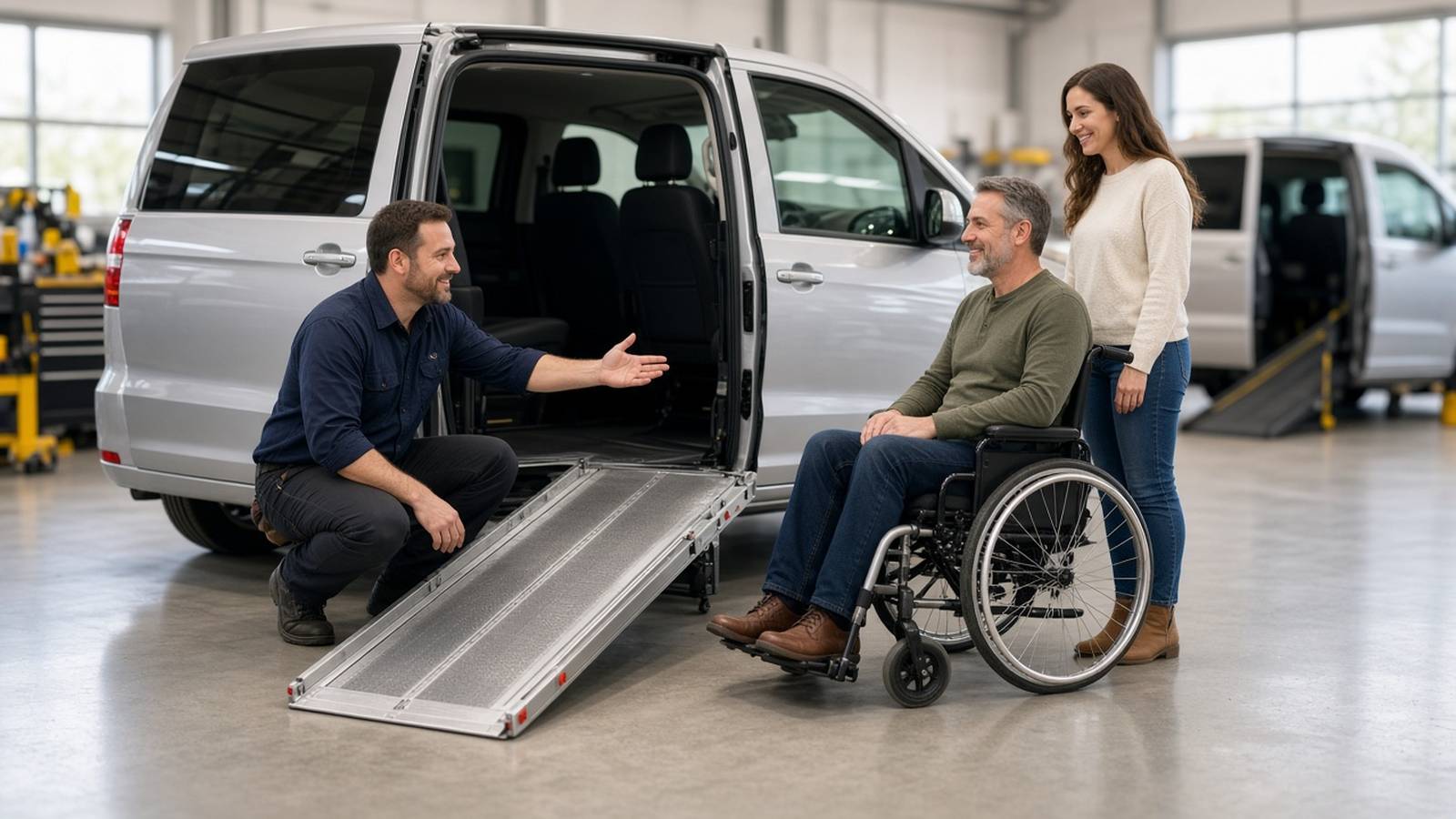
Mobility equipment dealers sit at an unusual intersection: part auto dealer, part custom fabrication shop, part healthcare provider. A single sale can involve a wheelchair-accessible vehicle, adaptive driving controls, seating, a driver rehabilitation specialist's prescription, and a funding source like the VA or a state vocational rehabilitation program. Most dealers are family-owned and owner-led, and the owner is usually the person who knows every customer, every funding rule, and every tricky install. That's a strength until the business grows past what one person can hold.
The economics are different from a typical car lot. NMEDA has estimated that a typical dealer location runs with roughly 3–15 employees and about $2.5 million in annual revenue from modified vehicles, equipment installs, and service. A new wheelchair-accessible vehicle typically costs $80,000–$100,000, much of the work is paid by third parties with their own price schedules and paperwork, and the service department is what keeps customers mobile — and coming back — for years after the sale.
The Entrepreneurial Operating System® fits because mobility dealers already run on process: QAP accreditation, documented installs, funding approvals, and safety checks. What's often missing is the layer above the shop — one owner per function, a weekly Scorecard, and a leadership meeting where issues actually get solved. Jon Kludt, a Certified EOS Implementer® with 350 sessions facilitated, works with founder-led companies of roughly 10–250 people across a wide range of industries — and the EOS® toolset is industry-agnostic by design.
Sound familiar?
- The owner is still the top salesperson, the funding expert, and the person techs call when an install goes sideways.
- Deals stall for weeks waiting on VA, vocational rehabilitation, or insurance paperwork, and nobody owns moving them forward.
- The service bay is either slammed or idle, and customers wait too long for repairs on equipment they depend on every day.
- Inventory of accessible vehicles ties up cash, and nobody watches days in stock until the floor-plan bill arrives.
- Certified technicians are hard to find and harder to keep, and knowledge lives in a few senior people's heads.
- Referral relationships with therapists, driver rehab specialists, and case managers depend on the owner personally.
An example Mobility Equipment Dealers Accountability Chart
A mobility dealer's chart reflects its three engines: selling vehicles and equipment, installing and servicing them, and getting third-party funding approved and paid. Here's a typical chart for an owner-led dealer with one or two locations. Seats, not people; in a smaller dealer one person may hold two seats, but every seat needs exactly one owner.
Visionary
- Dealer vision, mission, and core values
- Key manufacturer, VA, and referral-source relationships
- New product lines, locations, and services
- Big problem solving and community reputation
Integrator
- Lead, manage, hold accountable (LMA) across the leadership team
- P&L ownership and business plan execution
- Resolve issues between sales, the shop, and funding
- Run the meeting pulse and keep the V/TO™ and Rocks on track
Sales & Mobility Consulting
- Revenue target and qualified pipeline
- Needs assessments and vehicle/equipment recommendations
- Referral network: therapists, driver rehab specialists, case managers, VA staff
- Vehicle and equipment inventory mix and days in stock
- Marketing and community outreach
Service & Installation
- LMA for technicians and installers
- Install quality, safety checks, and QAP compliance
- Service scheduling, turnaround time, and mobile/roadside repairs
- Technician training and certifications
Funding & Customer Care
- VA, vocational rehabilitation, grant, and insurance paperwork
- Approvals, authorizations, and on-time submission
- Customer communication from quote through delivery
- Third-party receivables follow-up
Finance & Admin
- Accurate, on-time financials by department
- Cash flow, floor plan, and inventory financing
- Billing, collections, and parts inventory
- HR administration, insurance, and facilities
Seats, not people — one person can hold more than one seat in a growing company. The chart defines the structure the business needs, then you put the right people in the right seats.
Setting your V/TO™ numbers: what healthy looks like
A mobility dealer's V/TO™ needs numbers that reflect how the business actually earns money: vehicle and equipment sales, installation and service labor, and how much of the revenue depends on third-party payers. Here's the public context worth building your 3-year picture around.
Typical dealer location size
~3–15 employees; ~$2.5M annual revenue per location
NMEDA's estimate in congressional testimony (2015): dealer locations range from three to 15 employees, and each produces roughly $2.5 million a year from modified vehicles, equipment installs, and service. A useful baseline for revenue per employee in your 3-year picture. (NMEDA — Testimony to the House Committee on Veterans' Affairs (2015))
New wheelchair-accessible vehicle price
$80,000–$100,000 typical
NMEDA puts the typical new WAV at $80,000–$100,000. At that ticket size, every unit sitting in inventory is real cash, and every stalled funding approval is a large receivable. (NMEDA — Accessible Road Trip Tips for WAV Owners (2026))
VA maximum payments (October 2026 schedule)
Conversions $23,906–$46,454; auto allowance up to $27,908.90
The VA's Adaptive Equipment Schedule (updated October 1, 2026) caps reimbursement per item — vehicle conversions are capped at $23,906–$46,454 depending on chassis and entry type — and the separate one-time automobile allowance is up to $27,908.90. Quotes priced above the schedule get adjusted down, so pricing has to be built around it. (VA — Automobile Adaptive Equipment Schedule (updated 10/01/2026))
VA maximum labor rates
$135/hr in-shop; $148/hr high-tech; $155 emergency/roadside
The same VA schedule sets the maximum hourly labor rate for installation, repair, and replacement work. If your shop's cost per hour is creeping toward those caps, VA-funded service work stops being profitable. (VA — Automobile Adaptive Equipment Schedule (updated 10/01/2026))
Net profit proxy: franchised auto dealers
3.3% net profit before tax (2025); ~1.5–2.5% pre-pandemic
There's no public profit benchmark specific to mobility dealers, so the closest proxy is NADA data for franchised auto dealers: 3.3% net profit before tax in 2025, against a long-run pre-pandemic range of roughly 1.5–2.5%. In NADA's data, parts and service generate far more gross profit per dollar of revenue than vehicle sales. (Reynolds and Reynolds — Can AI raise the ceiling on dealership profitability? (NADA data))
A weekly Mobility Equipment Dealers Scorecard that actually predicts
A mobility dealer's Scorecard works when it's weekly, owned seat by seat, and covers all three engines — sales, the shop, and funding. Monthly financials tell you what already happened; these numbers tell you what's coming.
| Measurable | Example target | Why it's on the Scorecard |
|---|---|---|
| New consultations / needs assessments booked | Set from baseline | The top of the funnel. A drop here shows up in revenue two or three months later, after funding approvals and installs. |
| Referrals received by source (therapists, driver rehab, VA, case managers) | Set from baseline, trending up | Most mobility customers arrive through a professional referral. Tracking it by source shows which relationships need attention before they go quiet. |
| Funding files pending > 30 days | 0 without a next step | Third-party approvals are the biggest source of stalled deals. A weekly count forces someone to own every file that's stuck. |
| Vehicles and installs delivered | ≥ weekly plan | Delivery is when revenue is earned and the customer gets their independence back. Missing the plan points to parts, techs, or funding. |
| Service turnaround (days from request to repair complete) | Set from baseline, trending down | Customers depend on this equipment every day. Fast, reliable service is what earns repeat business and referrals. |
| Technician billed hours vs. available hours | ≥ 85% productive | Shop labor is the highest-margin dollar in the business. A weekly number shows whether the bay is being used or just staffed. |
| Accessible vehicles in inventory > 90 days | 0 without a plan | At $80,000+ per unit, aged inventory quietly eats cash through floor-plan interest. Watching it weekly keeps the mix healthy. |
| Third-party receivables over 60 days | Set from baseline, trending down | VA, vocational rehabilitation, and insurance payments can lag. Slow payers turn a profitable month into a cash crunch. |
Example quarterly Rocks
Rocks are the 3–7 most important things the dealer must get done in the next 90 days, each with one owner and a clear definition of done. Typical examples for mobility dealer leadership teams:
- 1Document the funding process for VA and vocational rehabilitation jobs, with a checklist and weekly pending-file review in place
- 2Move the owner's top 10 referral relationships to the sales seat, with joint visits completed
- 3Launch a preventive-maintenance program and enroll 100 existing customers
- 4Hire and certify one additional installation technician by week 12
- 5Reduce accessible-vehicle inventory over 90 days from six units to two
- 6Review pricing against the current VA schedule and update quotes and service rates
Guide download
Get the Mobility Equipment Dealers EOS® guide
The example Accountability Chart, benchmarks, Scorecard measurables, and Rocks from this page — on one branded PDF you can share with your leadership team.
From Jon's desk
You built a mobility business on service. Now build one that runs without you.
Most mobility dealers start with someone who genuinely cares about getting people moving again. Maybe it was a parent who built lifts in the garage, or a technician who saw what an accessible van meant to a family. Customers feel that care, therapists and case managers refer their clients, and the business grows.
Then the owner becomes the bottleneck. They know every funding rule, every tricky install, and every referral source by first name. Deals wait for their sign-off. Techs wait for their answer. Funding files sit until they have time to chase them. The business can only grow as fast as one person can work.
The numbers make this risky. A new wheelchair-accessible vehicle typically costs $80,000 to $100,000, so a few slow-moving units or a few stalled approvals can tie up a lot of cash. Much of the work is paid at rates set by third parties — the VA's schedule caps both equipment payments and hourly labor. And NMEDA's estimate of roughly $2.5 million in revenue per dealer location means there isn't much room for waste.
EOS® starts by clarifying who owns what. The Accountability Chart separates sales and mobility consulting from service and installation, and gives funding and customer care its own seat — because in this industry, paperwork is a core function, not an afterthought. The weekly Scorecard tracks consultations, referrals, pending funding files, deliveries, service turnaround, technician productivity, aged inventory, and receivables. And the Level 10 Meeting™ gives the leadership team ninety minutes a week to solve the issues that keep coming back.
The mission doesn't change. Customers still get the same care. What changes is that the care no longer depends on one person's memory and energy. Processes get written down, relationships get shared, and the next generation of leaders gets room to grow.
If the business only works when you're in the building, that isn't a sign you care too much. It's a sign the business needs an operating system — and that's fixable.
Frequently asked questions
We're a small, family-owned dealer. Is EOS® too much structure for us?
EOS® is built for entrepreneurial, owner-led companies, not big corporations. The tools are simple: one page for the vision, one chart for who owns what, a weekly Scorecard, and a weekly meeting. Smaller family businesses often get the most from it because it makes roles clear between family members and key employees.
So much of our revenue depends on VA and vocational rehabilitation funding. How does EOS® help?
EOS® can't change a payer's rules, but it makes sure someone owns them. Funding gets its own seat on the Accountability Chart, pending files show up on the weekly Scorecard, and stuck approvals get solved in the Level 10 Meeting™ instead of discussed and forgotten.
We already follow QAP and manufacturer procedures. What does EOS® add?
QAP and manufacturer procedures cover how the work is done safely. EOS® covers how the business is run: vision, accountability, weekly numbers, and solving issues. Dealers with strong shop processes usually implement faster, because the discipline is already there.
Which mobility businesses is EOS® a fit for?
Owner-led mobility equipment dealers, vehicle modifiers, and adaptive equipment installers — typically companies of roughly 10–250 people, though smaller dealers planning to grow use it too. EOS® is industry-agnostic, and Jon works with founder-led companies across a wide range of industries.
What happens on the first call?
It's a 30-minute call about your team and what's getting in the way. You leave with practical tools you can use, whether or not we work together.
What does it cost?
Jon will go over that on the call, based on the size of your team and how many sessions you'd do.
A business coach for leadership teams in mobility equipment dealers
If you've been searching for a business coach who understands mobility equipment dealers, here's the honest difference with EOS®: instead of generic advice, you get a complete operating system — installed by a world-class business coach and Certified EOS Implementer® — that starts from your numbers, your seats, and your 90-day priorities.
Jon Kludt has facilitated 350 sessions with founder-led leadership teams across a wide range of industries. The system is industry-agnostic by design; pages like this one exist so you can see it translated into your world before you ever book a call.
Benchmark sources
- NMEDA — Testimony to the House Committee on Veterans' Affairs (2015)
- NMEDA — Accessible Road Trip Tips for WAV Owners (2026)
- VA — Automobile Adaptive Equipment Schedule (updated 10/01/2026)
- VA — Current Special Benefit Allowances Rates (automobile allowance)
- Reynolds and Reynolds — Can AI raise the ceiling on dealership profitability? (NADA data)
- AMREF — Auto Mobility State of the Industry Report
What leadership teams say about working with Jon
“EOS has completely changed my life. I used to be an over-stressed centralized operator of every decision, problem, option, and solution inside my business. Now I’m a decentralized owner of my business who enjoys owning a business that runs itself. The freedom to live, put my family first, and work ON my business, instead of in it, has given me peace and freedom I never thought possible. I work on my business when and how I want to, while I enjoy knowing it’s firing on all cylinders without my daily management or my time. EOS not only gave me life back, but my business has never been more successful; it’s on a growth trajectory that makes all my wildest dreams well within reach. Now I know it’s not if my business will achieve its goals, but simply when. And it’s such a fun experience to know that and watch it grow! ”
Nick Hooge
Owner of Freedom Boat Club, Seattle
“Jon has been a transformative coach for our leadership team. His ability to ask the right questions at the right time and guide us through real, lasting changes has been invaluable. We're more aligned, more accountable, and honestly — more excited about the business than we've been in years.”
Greg Grand
“Working with Jon has been one of the best investments we've made. He doesn't just teach a system — he coaches you through the hard conversations and holds you accountable. Our leadership team is stronger, our meetings are better, and we actually look forward to planning now.”
Peter Crabtree
Visionary of Crabtree Brands
Ready to run your business on EOS®?
Book a call. You'll leave with practical tools you can use right away — whether or not we work together.
Related industries